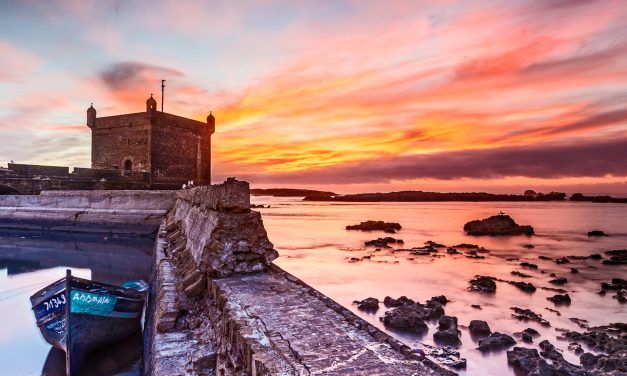
Morocco looks simple on a map — a wedge of Africa pressed against the Atlantic and the Mediterranean — but it rewards travellers who arrive prepared. The difference between a great trip and a stressful one is rarely the monuments; it is the small stuff: knowing what a taxi should cost, when to haggle, what to wear and how to say no with a smile instead of a scowl.
In ten years of driving visitors across the country — from the medinas of Marrakech and Essaouira to the dunes of the Sahara — we have watched the same questions surface on every journey. How much do I tip? Can I use my card? Is the tap water safe? Is that man a real guide? This article gathers the 25 Morocco travel tips we actually give friends before they board the plane, each one learned on the road rather than in a guidebook.
Many travellers pair the imperial cities with the Atlantic coast, and that leg of the trip is where a little planning pays off. If your route runs from Marrakech to the beach, a private taxi from Marrakech to Essaouira collects you from your riad and delivers you door-to-door in about two and a half hours — no bus queue, no waiting for a shared taxi to fill.
Pack for the Weather, Not the Season
Morocco contains every temperature imaginable. On the same July day Marrakech can sit at 40°C, Essaouira stays a breezy 26°C thanks to the trade wind, and the High Atlas villages hover near 12°C. The desert is the real surprise: sand that burns bare feet at noon turns cold enough for a fleece by midnight. Whatever month you travel, the answer is layers.
A light jacket or cardigan earns its space in every bag, along with long trousers for mosques and nicer dinners. Sunscreen, sunglasses and a hat are non-negotiable from March to November. And between the medina dust, the beach sand and the cobbled alleyways, closed shoes win every time — open sandals fill with gravel the moment you step onto a cart track.
What we ask our clients to pack
- A lightweight scarf or shawl — for mosque visits, dust and the air-conditioned car.
- A refillable water bottle; tap water is not for drinking, but hotel filtered water is.
- A universal adapter — Morocco uses the two-pin European plug at 220V.
- A pocket notebook for prices, riad addresses and new Darija words.
- Half the clothes you think you need, and twice the comfortable walking shoes.
One packing rule we repeat to everyone: leave the valuables at home in spirit, if not in fact. A single day bag for the souks is all you need, and keeping your passport in the hotel safe removes nine out of ten problems. Hats beat umbrellas, cotton beats synthetics, and a small torch is genuinely useful when the medina's power dips during a summer storm.
Money, Prices and Haggling
Morocco's currency is the dirham, a closed currency you cannot buy before you arrive and rarely convert after you leave. Bring euros or dollars to exchange at a bank, or simply withdraw from an ATM. Machines hand out 200-dirham notes, and those notes are hard to break, so collect small change at every opportunity — a wallet of tens and twenties makes every transaction smoother.
Prices exist in two worlds. Hotels, restaurants and our own private taxi link between Essaouira and Agadir work with published, fixed rates. The souks run on negotiation: the first number quoted is an opening bid, usually double the fair one. Treat haggling as a game, not a fight — offer half, laugh, walk away, come back — and settle around sixty percent of the opening figure. Whatever the item, agree the price before money changes hands.
Local tip: Carry small notes. Shopkeepers and taxi drivers are chronically short of change, and handing a 200-dirham note to someone selling a 6-dirham mint tea is the fastest way to overpay.
| Item | Typical price | Where to find it |
|---|---|---|
| Mint tea | 5–10 dirham | Any café terrace |
| City bus ticket | 5 dirham | In town |
| Market tagine lunch | 60–120 dirham | Food stalls, medina |
| Shared grand taxi, short hop | 15–30 dirham | Per seat, fixed route |
| Private transfer, 175 km | from 69€ | Booked in advance |
With 600–900 dirham a day per couple you can eat well, sleep in a decent riad and visit everything worth seeing. Morocco is genuinely affordable; what takes practice is not the budget but the bargaining.
Exchange a little cash at the airport for the first day — the rate is acceptable and the convenience is worth it — then use ATMs and banks in town for the rest. Hotels change money too, usually at slightly worse rates. And whatever you do, avoid the men who whisper rates on street corners; their small print always appears later.
Dress, Etiquette and Photography
Morocco is a conservative Muslim country with a famously relaxed coast, and visitors are given a great deal of latitude. A little awareness still opens every door. In medinas, around mosques and out in the countryside, women feel far more comfortable with shoulders and knees covered, and men should think twice before walking through markets shirtless. Nobody expects a djellaba — a light scarf and long cardigan over western clothes is all it takes to blend in.
Ask before you photograph people. Most Moroccans will pose happily, and a small coin afterwards is fine — for many, posing is a job. Never photograph police checkpoints or military buildings. During Ramadan, avoid eating, drinking or smoking in public during daylight hours out of respect, and know that many cafés close until sunset. On Fridays the midday prayer empties the souks for a couple of hours, which happens to be the best time of the week to photograph empty lanes.
Greetings matter more than you expect. A warm "salam" with a handshake opens conversations, and it is polite to use the right hand for eating and for handing over money. Public displays of affection between couples are best kept discreet, and modest dress extends to the beach — topless sunbathing is not the norm on the public sand.
Getting Around: Trains, Grands Taxis & Private Drivers
The ONCF railway is the backbone of Moroccan travel — Marrakech, Casablanca, Rabat and Fes are all connected by frequent, inexpensive trains. Where steel does not run, buses (CTM and Supratours) and shared grands taxis fill the gaps. A grand taxi is a big Mercedes that departs when full, taking five or six passengers along fixed routes; it is the cheapest way to reach the towns without a station, and a slice of local life in itself.
On the coast the road is half the pleasure. The run from Marrakech to Essaouira climbs through the argan forest in roughly two and a half hours, and the drive south to Agadir hugs the ocean for most of its length. A private car means you choose the schedule, stop for photos and skip the scrum at the bus rank. When you want to push deeper, our private taxi from Essaouira to Ouarzazate opens the southern Sahara without a single stressful connection.
When a private driver earns its price
- Night arrivals and early departures, when buses do not run.
- Families with children, heavy luggage, or anyone prone to car sickness.
- Travellers who want to stop at viewpoints, cooperatives and mint-tea breaks.
- Multi-day loops, where a driver doubles as guide, translator and baggage handler.
If you rent a car, drive defensively: slow for the villages' speed bumps, expect motorbikes to filter anywhere, and carry a physical copy of your licence. Police checks are common but friendly, and the fixed speed cameras genuinely are fixed.
Safety and Common Scams
Morocco is a safe destination. We carry families, couples and solo travellers every week, and the vast majority of visits end without a single unhappy moment. What you should prepare for is annoyance rather than danger. The classics are the self-appointed guide who leads you down an alley and then demands payment, the carpet shop offered as a shortcut, and the bargain tour sold on a street corner that turns out to be a taxi to nowhere.
The defences are unglamorous and they work: agree prices before any service, trust your riad's staff over street touts, and answer "la, shukran" firmly while you keep walking. If a stranger announces a monument is closed, walk two minutes and check for yourself — it almost never is. To see where the rules loosen up, our is Essaouira safe guide walks through Morocco's most relaxed city block by block.
Local tip: Never sit in a taxi before agreeing the fare, and never hand over money for a tour you have not booked in writing. Fixed-price private transfers remove both questions at once.
Eating, Drinking and Practical Extras
Moroccan food is the quiet reason so many travellers start pricing second visits before they have left. Breakfast is msemen flatbread slicked with honey; Friday lunch is couscous; and the street stalls serve brochettes, sardines and harira soup that shame most restaurants back home. Follow the queues — locals queue where the food is fresh. Drink bottled or filtered water, and treat tap-water ice with suspicion outside good hotels.
Pick up a local SIM card at the airport for around 50 dirham — Maroc Telecom, Orange and inwi all sell data bundles that cost a fraction of roaming. English carries you through the tourist centres, French everywhere else, and a few Darija words — shukran (thank you), bshal (how much), safi (enough) — earn genuine smiles. Morocco sits on Greenwich Mean Time, so there is no jet lag from the UK, and the working weekend falls on Saturday–Sunday.
Plan for Friday, not as a problem but as a rhythm: the midday prayer means shops pause, banks close and the streets empty for an hour, then everything reopens busier than before. It is also the traditional day for couscous, and nearly every restaurant worth its salt serves it at Friday lunch.
Pull those threads together and these Morocco travel tips cover almost everything that goes wrong on a first visit: pack for extremes, carry small cash, dress with respect, fix the price before you ride and let a professional handle the driving when the distance matters. Do that, and the country unfolds exactly as it should — Atlas passes, argan groves, desert nights and the blue-and-white calm of the coast.
Ready to travel? Book a private driver in Essaouira or arrange an Essaouira airport transfer and enjoy door-to-door comfort with a professional local driver who will also act as translator, photographer and guide.